Site and Soil Evaluation in College Station, TX
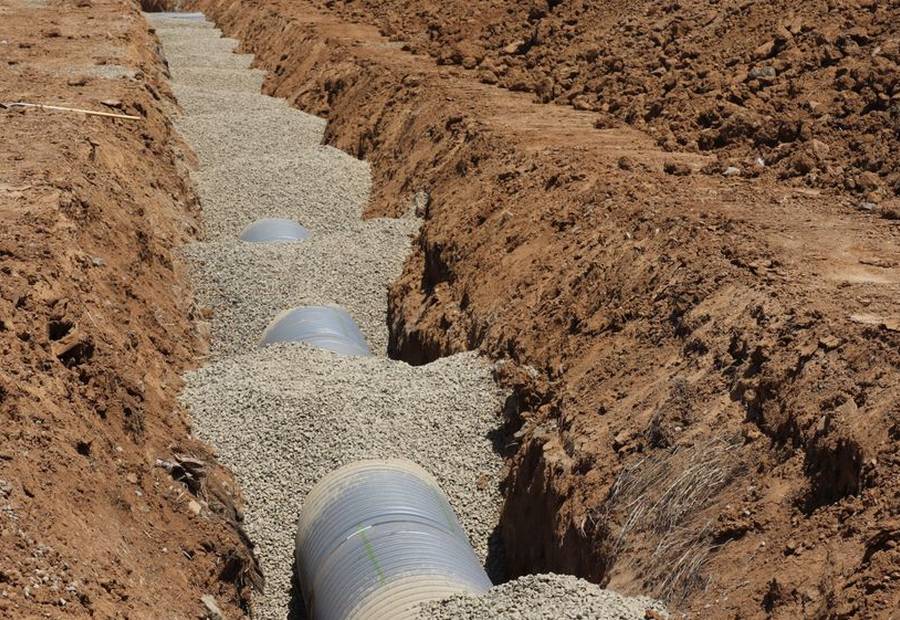
Every honest septic quote in Texas starts with the ground, because the ground decides everything downstream. College Station Septic Systems runs the site and soil evaluation on lots across College Station and Brazos County, and the result of that evaluation is what sizes the system, determines whether it can be conventional or has to be aerobic, and produces a price that will hold.
A percolation test only times how fast water drops in a hole. A soil evaluation reads the ground itself. An evaluator opens a pit or pulls a boring and logs the texture, the layering, the color and the mottling that mark where water stands in a wet season, and the depth to rock or to a hard clay pan. They map the slope, the setbacks from the well and the lot lines, and where surface water moves. That is a far more complete picture than a rate alone, and it is the picture the design and the county both rely on.
Why It Governs the System Type
Soil that drains well and runs deep might carry a simple conventional trench field. Tight clay that barely accepts water will not, and that lot passes only as an aerobic system, where the treatment happens in the tank and the ground has little left to do. Around College Station the clay governs more often than not. The evaluation is what tells you which side of that line your parcel falls on, before a dollar is spent on the wrong design.
The Brazos Valley Ground
The land here carries heavy, expansive clay over much of its reach, the kind that swells in a wet spring and cracks open in an August drought. Water does not pass through it quickly. Closer to the Brazos and the Navasota rivers, the bottomland adds a seasonal high water table that a buried field has to respect. These are not reasons a lot cannot be built on. They are the reasons the system has to be designed to the specific ground rather than dropped in to a standard pattern.
Test Before You Buy
If you are weighing a lot, read the ground before you close. A parcel that will only carry a costly aerobic system, or one where the well and the creek leave no room for a legal dispersal area, is worth knowing about while you can still walk away. The evaluation costs a small fraction of the system it governs. Call (979) 555-0142 and we will read the ground before anyone talks price.
What is a site and soil evaluation?
It is a reading of your actual ground by a qualified evaluator. Someone opens a pit or pulls a boring, logs the soil texture, the layers, the color and mottling that show where water sits in a wet season, and the depth to any rock or hard clay. They also map the lot's slope, the setbacks, and where surface water runs. That report is what sizes the system and decides whether it can be conventional or has to be aerobic.
Why does the evaluation come before the price?
Because the soil sets the system, and the system sets the cost. A lot with soil that drains might carry a cheap conventional field. The same size lot with tight clay might only pass as an aerobic system with spray or drip, which costs more. Until the ground is read, any number is a guess. We evaluate first so the quote you get is real, not a figure meant to win the job and climb later.
Does good percolation mean I can skip aerobic?
Not by itself. A percolation test clocks how fast water drops in a hole, but it can pass a spot that has a clay shelf or a high water table just below it. A full soil evaluation reads the profile, not just the rate, which is why Texas leans on it. On much of the Brazos Valley the clay is what governs, and even a decent surface reading often gives way to an aerobic design once the profile is logged.
I am buying land. Should I test before I close?
Yes, and it is the cheapest insurance on the whole purchase. A lot that will only carry an expensive aerobic system, or that cannot meet setbacks from a well or a creek, is worth knowing about before the money changes hands, not after. A soil evaluation on a parcel you are considering costs a fraction of the system, and it has talked more than one buyer out of a lot that could not be built on affordably.
What makes Brazos County soil tricky?
Much of it is heavy, expansive clay that swells when wet and shrinks and cracks when dry. Water moves through it slowly, which limits a conventional trench field, and the shrink-swell can stress buried lines over time. River-bottom ground near the Brazos and the Navasota adds a seasonal high water table in places. None of that is a dealbreaker. It just means the system has to be designed to the soil, and that starts with reading it.